How mesothelioma rates changed in Pennsylvania over three decades
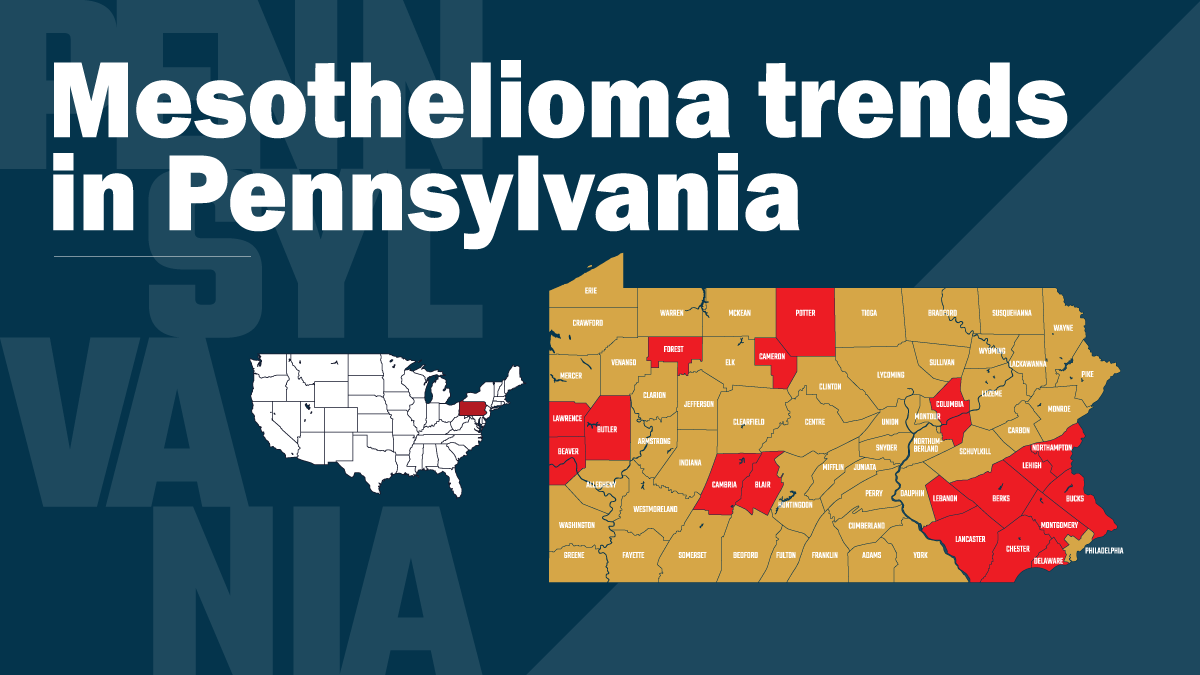
A recent study looked at nearly 30 years of mesothelioma data in Pennsylvania, using records from the Pennsylvania Cancer Registry covering 1990 through 2019. The research gives a clearer picture of how this rare cancer has changed over time, how it varies by type, and where within the state it has been most common.
What the data shows
Mesothelioma is a rare cancer that forms in the lining of organs such as the lungs or abdomen. It is most often linked to past asbestos exposure and usually shows up many years after contact with asbestos fibers.
Researchers reviewed about 6,000 confirmed cases from the registry. They focused on the two most frequent forms of the disease:
Pleural mesothelioma: affects the lining of the lungs
Peritoneal mesothelioma: affects the lining of the abdomen
In the dataset, around 85 percent of cases were pleural type and fewer than 10 percent were peritoneal, reflecting national patterns.
Pleural mesothelioma changing trends in Pennsylvania
Pleural mesothelioma cases climbed steadily through the 1990s and 2000s, then began to fall around 2005. The authors link this decline to stronger workplace asbestos regulations from earlier decades, with benefits appearing only after the long delay that is typical for this disease.
Peritoneal mesothelioma changing trends in Pennsylvania
Peritoneal mesothelioma stayed rare throughout the 30 years studied. Overall numbers did not change much, but there was a noticeable increase among younger adults and women. This may point to risk factors beyond traditional workplace exposure, though more research is needed.
Where is mesothelioma most common
Mapping the data showed geographic patterns in both types of mesothelioma. Higher rates of pleural cases appeared in several southeastern and western counties, areas with a history of heavy industry and asbestos use. Peritoneal mesothelioma showed a broader, more scattered distribution across the state, with some overlap in the same regions.
Why this matters
Even decades after the peak use of asbestos in industry, health effects are still showing up. The trends for pleural mesothelioma likely reflect past occupational exposures, while trends for peritoneal mesothelioma raise questions about other exposure routes and detection patterns. Researchers emphasize the need for ongoing monitoring and better understanding of all forms of asbestos exposure, especially in communities with higher case rates.

Free Mesothelioma Patient & Treatment Guide
We’d like to offer you our in-depth guide, “A Patient’s Guide to Mesothelioma,” absolutely free of charge.
It contains a wealth of information and resources to help you better understand the condition, choose (and afford) appropriate treatment, and exercise your legal right to compensation.
Download Now