Category: Featured News

Contest Could Bring Handheld Medical Tool to Mesothelioma Patients
One of the props used by Dr. McCoy, of the iconic 1960s television series Star Trek, was the Tricorder. With a point, swipe, and beep, the doctor could examine and diagnose the USS Enterprise’s crew members. Now, thanks to a contest, this science fiction device may soon become a reality bringing “healthcare to the palm of your hand,” and helping mesothelioma patients avoid some of their countless medical appointments.
The Qualcomm Foundation, along with the world’s leading visionaries, hold a three-day summit each year to brainstorm ideas to help mitigate some of the challenges facing the world. The goal is to create an incentivized global competition that could lead to a solution to the problem. In 2012, the summit attendees focused on healthcare.
With all the technological advances, the team thought, it is inconceivable that an individual has to physically go to a healthcare facility, clinic, or doctor for a diagnosis of any condition. They felt this model of health care has led to bottlenecks to access of care, backlogs in laboratories, and a rise in healthcare costs. The visionaries agreed that a medical device, for consumers, could be designed to address this problem. The Qualcomm Tricorder XPRIZE competition, with a total prize package of $10 million, was conceived to spur the creation of Dr. McCoy’s Tricorder.
U.S. Team Takes Top Prize
On April 12, 2017, the U.S. team, Final Frontier Medical Devices, based in Pennsylvania, was announced the winner of the nearly five-year competition netting them $2.6 million to help bring the prototype to reality. Led by two brothers, Dr. Basil Harris, an emergency medicine physician, and George Harris, a network engineer, the team created DxtER.
The second place winner, Dynamical Biomarkers Group of Taiwan, received $1 million to help bring their device to fruition.
“It is very exciting that our vision of mobile, personalized patient-centric healthcare is getting closer to becoming a reality thanks to the great work of the Qualcomm Tricorder XPRIZE teams,” said Dr. Paul E. Jacobs, executive chairman of Qualcomm Incorporated, in an April 13 press release announcing the winner. “Creating technology breakthroughs in an industry as complex as healthcare is quite a milestone, and what these teams accomplished is a great stepping stone to making mobile healthcare a viable option across the world.”
The field began with 312 teams from 38 countries all working to create a Tricorder prototype. During the multi-year competition the field was narrowed to 29 teams from nine countries, and finally to two finalists from two countries. The two final teams, representing the U.S. and Taiwan, were chosen in December 2016.
Five-Pound Device Houses Complex Functionality
“Our device is smart and simple, giving people the help and answers they need when they need this input the most,” said Dr. Basil Harris, founder of Basil Leaf Technologies, in a press release announcing his team’s success.
The final product had to adhere to strict requirements such as allowing an individual to determine if and what care is required without leaving home; it should weigh no more than five pounds; it must collect, store, and share vital health data via the internet; and cause no harm to the consumer either by thermal or electrical energy, needles, lancets, or infections.
Expert Insight
Dr. Basil Harris
“There is nothing like it in existence, and we believe this technology will change the face of health care.”
In order to diagnose patient conditions, the device must be capable of collecting key health metrics like blood pressure, respiratory rates, and temperature over time and in various health states. The volume of data accumulated over time will allow the device to determine the consumers health conditions without expensive or invasive laboratory tests.
The winning prototype was to capture five real-time health vital signs, blood pressure, heart rate, oxygen saturation, respiratory rate, and temperature and identify 10 health conditions. The health conditions include: anemia, A-fib, COPD, diabetes, leukocytosis, pneumonia, otitis media, sleep apnea, urinary tract infection, and shingles. It must also be able to determine the absence of any condition allowing the patient to avoid unnecessary medications.
DxtER, the winning tool, is capable of diagnosing 34 health conditions.
Tricorder Benefits for Mesothelioma Patients
For mesothelioma patients and their caregivers, being able to determine, from the comfort of their home, what and if medical care is required, has significant benefits. Early detection of pneumonia, for example, can mean the difference between treatment at home and complications requiring hospitalization.
Mesothelioma, a rare cancer causally linked to asbestos exposure, is typically diagnosed in patients over the age of 65. At that age, many patients may have unrecognized medical problems that also need to be addressed. However, with the toll mesothelioma takes on a patient, symptoms that may mean a heart condition or diabetes often go ignored simply because of the burden of another round of doctors’ appointments and tests.
With the possibility of having their own diagnostic device at home that can collect their health data, assess the illness, and determine the appropriate course of action, whether that requires medical intervention or not, mesothelioma patients will feel more empowered, less stressed and may realize a better quality of life.
The device “gives users access to continuous, reliable health data – the information patients and providers need to more effectively manage chronic health conditions, such as diabetes and congestive heart failure,” according to Basil Leaf’s website.
With the advancements in mesothelioma care bringing the cancer closer to being a chronic disease, this device can allow patients to focus more on their lives and less on their illness.
The Qualcomm Foundation, and other strategic partners, are committed to seeing the Tricorder competition bring marketable products into the hands of consumers, and they have pledged millions of dollars in initiatives to support the teams.
To find out more about this exciting project visit the Qualcomm Tricorder XPRIZE website.
Photo Credit: Qualcomm Tricorder XPRIZE
Sources:
- Qualcomm Tricorder XPRIZE competition
http://tricorder.xprize.org/ - Basil Leaf’s website
http://www.basilleaftech.com/dxter/ - Basil Leaf Technologies
http://www.basilleaftech.com/blog-1/ - Dr. Paul E. Jacobs, executive chairman of Qualcomm Incorporated
http://tricorder.xprize.org/press-release/family-led-team-takes-top-prize-qualcomm-tricorder-xprize-competition
Rare Disease Day Brings Mesothelioma into the Spotlight
MesotheliomaHelp will be joining the National Organization for Rare Disorders (NORD), and countless other organizations, in the fight to raise awareness of the more than 7,000 rare diseases on Rare Disease Day tomorrow, Feb. 28. For the ninth year, NORD will focus a spotlight on rare diseases as a global public health concern. Mesothelioma, an asbestos-related cancer, is one of the rare, or “orphan,” diseases or conditions affecting one in ten Americans.
In the United States an orphan disease status is assigned to a disease or disorder if it affects fewer than 200,000 Americans at any given time. In the case of mesothelioma, 3,000 Americans are diagnosed with the disease each year.
This year’s focus is on research. Research brings hope to people living with rare diseases and while there is ongoing research to find new treatments or a cure, many of the diseases still do not have effective treatments. There is no cure for mesothelioma and the cancer is resistant to many of the available treatments.
Rare Disease Day is an annual event observed worldwide on the last day of February dedicated to raising awareness among the general public and decision-makers about rare diseases and the impact on patients’ lives. The day was started in 2008 by EURORDIS-Rare Disease Europe. In 2016, more than 85 countries participated, including France, Canada, Greece, and first time participants Aruba, Tanzania, and Zimbabwe.
Expert Insight
NORD
People with rare diseases struggle to get a proper diagnosis, find information, and get treatment.
The organizers want to educate the public about the inequalities in medical care suffered by people with orphan diseases. According to NORD, patients with orphan diseases are often faced with difficulty in finding medical experts, delay in receiving an accurate diagnosis, and access to few, if any, treatment options. In the U.S., malignant mesothelioma patients often have to travel to large cities where the mesothelioma experts practice in order to receive adequate treatment.
Due to the relative rarity of mesothelioma, and other orphan diseases, managing the disease and trying to find appropriate treatment can be overwhelming to the patients and their families. In fact, according to government statistics, between 85 and 90 percent of orphan diseases are serious or life-threatening, yet only about 200 of them currently have any effective treatments.
Rare Disease Day 2017 activities in the U.S. include state legislature awareness events, a Handprints Across America photo gallery on the national website, and events in communities across the U.S.
For more information about Rare Disease Day activities in the U.S, see www.rarediseaseday.us. For information about global activities, see www.rarediseaseday.org.

Mesothelioma Patients May Someday Use a Pinworm Drug to Treat the Asbestos Cancer
When looking for a new, effective anti-cancer treatment, researchers often turn to drugs approved by the U.S. Food and Drug Administration for other diseases or conditions. Finding on off-label use for a drug can shorten the research time and cost to market for treatment of other diseases. Researchers are now looking at repurposing a drug approved for pinworms to treat cancer.
According to a Jan. 30 report from NPR.org, researchers at Johns Hopkins University found that mebendazole, used to treat pinworms, parasitic worms that can live in the large intestine, may be effective in fighting cancers, including brain, lung, and potentially, mesothelioma. The team found that when mice that had pinworms, and were implanted with brain cancer cells, were treated with mebendazole the cancer did not develop.
Encouraged by those results and by the fact that other researchers were conducting similar studies for lung cancer and melanoma, the researchers began two Phase I clinical trials to test the drug’s safety and tolerability in brain cancer in children and adults. The drug has been well tolerated, as expected by the decades-old drug used worldwide to treat pinworms.
“Based on the preclinical studies it looks like it has promise,” says Tracy Batchelor, director of the division of neuro-oncology at Massachusetts General Hospital, who is not involved in the research, according to NPR. “The next step is to look for a benefit in a Phase 2 trial.”
A Phase II trial will determine whether mebendazole is effective on the cancer in people. The Johns Hopkins researchers hope to conduct that sort of trial in adult brain cancer patients.
The benefit of an FDA-approved treatment is that it has already been through clinical trials so there are few surprises for patients and physicians. Side effects are well-known and can be managed. One drug’s success in one condition could lead to an equally effective drug in other diseases.
Clinical trials and the use of off-label drugs bring the best options for improved survival to pleural mesothelioma patients. The cancer that is aggressive and terminal has proven to be resistant to many cancer treatments driving researchers to continue to search for improved care.
“It’s not likely that mebendazole or any other single repurposed drug is ever going to cure cancer,” said Bruce Bloom, president and chief science officer of Cures Within Reach, which has helped to fund the Johns Hopkins research. However, NPR reports, there is the possibility that combinations of repurposed drugs could help in the fight against cancer. Bloom adds that results from this research is still years away.
Recent research has increased survival and quality of life for mesothelioma patients, and many hope to get to the point where mesothelioma is managed as a chronic disease.
To find clinical trials where mebendazole is being tested on cancers visit ClinicalTrials.gov.
Lung Cancer Driver Discovery May Lead to Novel Therapy for Some Mesothelioma Patients
Lung adenocarcinoma, the most aggressive subtype of non-small cell lung cancer (NSCLC), comprises nearly 40 percent of lung cancer diagnoses. The KRAS gene is the most significant driver of this cancer, and is also found in some pleural mesothelioma cases. Researchers have been stymied by this tough gene that nearly always fights off treatments building resistance to the drugs. Now, researchers report they have found a “genetic promoter” that drives this type of cancer and could lead to a new anti-cancer therapy.
Researchers from the Mayo Clinic report that the Ect2 gene (Epithelial Cell Transforming 2) is responsible for cytokinesis, cell division, in normal, healthy cells. However, they found that Ect2 was not needed for cytokinesis in lung adenocarcinoma cells, leading them to uncover the other function Ect2 serves in cancerous cells. They found that Ect2 boosts ribosomes, which “manufacture proteins from messenger RNA instructions.”
“Ect2 drives increased synthesis of ribosomal RNA, which in turn gives rise to increased ribosomes,” said Alan Fields, Ph.D., senior author on the paper and a cancer biologist in the Department of Cancer Biology at Mayo Clinic’s Florida campus, in a Jan. 19 press release. “While it’s been known for a long time that tumor cells have elevated ribosome levels, this paper is the first to show that Ect2 supports tumor cell growth by stimulating ribosome biogenesis.”
Pleural mesothelioma is a serious cancer affecting the lining of the lungs that occurs in individuals previously exposed to airborne asbestos fibers. Asbestos is a known carcinogen and is also proven to cause lung cancer and asbestosis, a chronic lung disease. While there are some differences between pleural mesothelioma and lung cancer, such as the fact that mesothelioma displays as a large mass of interlocked tumors whereas lung cancer is characterized by more distinct, individual tumors, the treatments are often similar.
“KRAS-mediated lung adenocarcinoma is a particularly deadly form of lung cancer, in part because attempts to directly target KRAS therapeutically have not been successful in the clinic,” says the study’s lead author, Verline Justilien, Ph.D., an assistant professor in the Department of Cancer Biology at Mayo Clinic’s Florida campus.
“Our current findings reveal a potential novel therapeutic strategy for treating mutant KRAS lung adenocarcinoma cells in which Ect2 is overexpressed,” Dr. Justilien said.
The American Cancer Society estimates about 222,500 new cases of lung cancer and nearly 155,870 deaths from lung cancer in the U.S. in 2017. Close to 3,000 Americans will be diagnosed with mesothelioma this year with nearly the same number dying from the terminal cancer.
Read the results of the Mayo Clinic study in the January 19 issue of Cancer Cell.
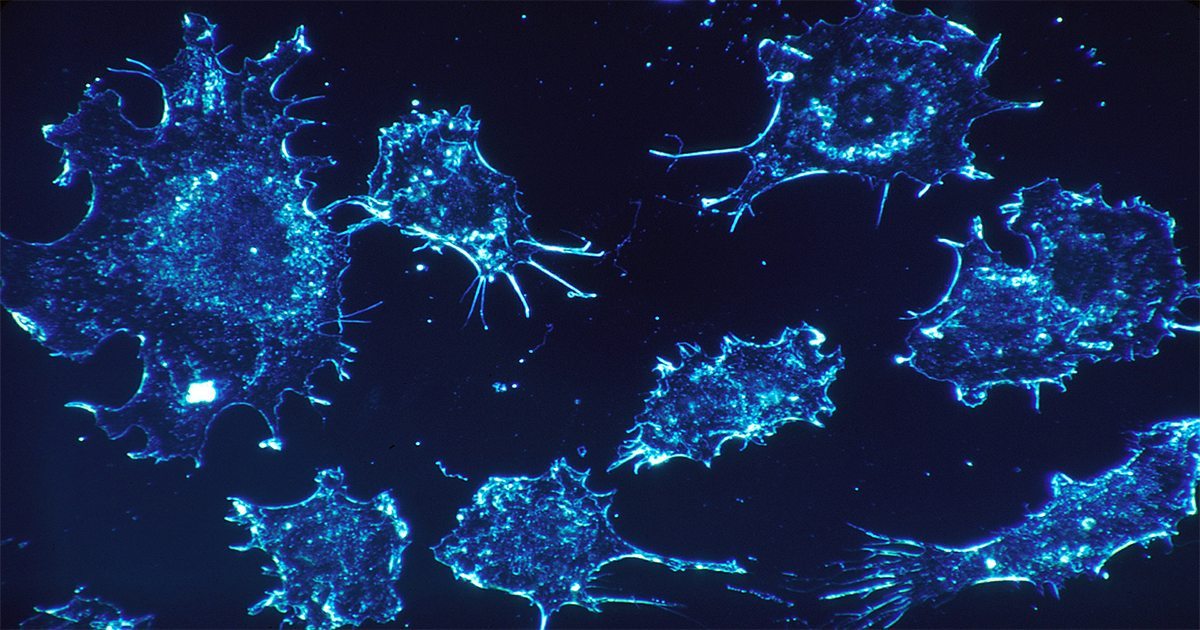
A Pair of Proteins Could Lead to a New Lung Cancer or Mesothelioma Treatment
Last month, MesotheliomaHelp reported on early research from the UK where resea
rchers identified the Spns2 gene could reduce metastasis in lung cancer, and, potentially, in mesothelioma. Identifying a gene or protein effective in halting metastasis is a hot research topic, and now, another team of researchers report they have taken a closer look at a two-part protein to assess its ability to slow cancer growth.
Researchers from the Medical University of South Carolina (http://academicdepartments.musc.edu/newscenter/2016/wrangle-rubinstein-lung-cancer.html) knew that the NRP genes, NRP1 and NRP2, are up-regulated in cancer tumors leading to poor patient prognosis. However, the NRP2 protein is comprised of a 2a and 2b isoform, and when the scientists delved deeper into the effects on lung cancer, they found that while the two are “nearly identical” the differences were significant enough to affect cancer progression.
“Whenever we expressed NRP2b the cancer metastasized, and whenever we expressed NRP2a progression and metastasis were suppressed,” said Robert Gemmill, Ph.D. who holds the Melvyn Berlinsky Endowed Chair for Cancer Research at MUSC. “Clearly, with the 2b isoform, we have found something that promotes metastasis.”
Lung cancer and pleural mesothelioma, the signature cancer of asbestos, are both aggressive and both quickly metastasize, limiting survival. Past research has shown that it is this metastasis, not the original cancer tumors, that leads to death in nearly 90 percent of cancer patients. Unlocking the mystery of metastasis is critical for helping patients lead a longer life.
Through various experiments, the MUSC team found that the potent tumor suppressor, SEMA3F, was reduced or lost, while NRP2b was induced, leading to lung cancer progression. They then found that when NRP2b was knocked out, or suppressed, and NRP2a was induced, chemotherapy resistance was limited, and metastasis was limited.
These findings were encouraging to the team and they hope the findings will “open new avenues for potential therapies,” and that other scientists will pick up the research for development of new treatments for lung cancer. Gemmill points out that uncovering the effects of NRP2b could lead to monoclonal antibodies to target the 2b isoform, new immunotherapies, and possibly using NRP2b as a biomarker for predicting patients’ responses to treatment.
“I think a lot of people are going to sit up when they read this article and say, ‘I wonder what it does in my system?'” said Gemmill.
Nearly 3,000 Americans are diagnosed with mesothelioma each year. The cancer is terminal, and the prognosis is often less than 18 months.
Read the full study in the Jan. 17 issue of Science Signaling (http://stke.sciencemag.org/content/9/450/rs12).

Free Mesothelioma Patient & Treatment Guide
We’d like to offer you our in-depth guide, “A Patient’s Guide to Mesothelioma,” absolutely free of charge.
It contains a wealth of information and resources to help you better understand the condition, choose (and afford) appropriate treatment, and exercise your legal right to compensation.
Download Now