Category: Featured News

Stopping Mesothelioma Tumors From Reaching Blood Supply May Improve Survival
Mesothelioma is a signature cancer of asbestos, affecting the lining of the lungs or abdomen. The cancer is extremely aggressive, and the cancer cells continue to grow and multiply as additional blood vessels develop bringing more food and oxygen to them. Now, researchers believe they have found the key to the way mesothelioma tumors tap into blood vessels opening the door for “treatments to prolong life” for patients.
Researchers from the Flinders University of Adelaide, Australia report they have found that mesothelioma tumors do not wait for blood vessels to form, rather the cancer cells actually “transform into blood vessels” fueling their own growth. According to a Nov. 14 article from ABC Australia, the discovery will better help scientists understand how to treat the insidious asbestos-caused cancer.
“Instead of waiting for the outside of the tissue to grow blood vessels in, the tumour cells themselves branch out, growing blood vessels that reach out into surrounding tissues, tapping into the native vasculature,” said lead researcher Associate Professor Sonja Klebe.
There are cancer treatments available that are designed to inhibit the formation of new blood vessels to tumors, slowing the growth and spread of the tumors. Avastin, sometimes used in mesothelioma treatment, was the first U.S. Food and Drug Administration – approved biological therapy designed to inhibit blood vessel formation.
According to Klebe, however, these treatments target the blood vessels that grow into the cancer as opposed to the other way around. She believes treatments need to look at both approaches to ultimately starve the tumors of blood.
“I think a cure for mesothelioma is not on the horizon in the immediate future, largely because we don’t detect the tumours early enough,” Klebe said.”But I think we are closer to finding treatments that will prolong life, with less impacts on quality of life.”
Nearly 3,000 Americans are diagnosed with mesothelioma each year and nearly the same number die from the cancer. According to the article, twelve Australians die each week from mesothelioma and the country has one of the highest rates of the disease in the world. Currently, there is no cure for the cancer. Finding an effective way to stop tumor growth is needed to improve survival and quality of life in mesothelioma patients.

A New Approach to Blocking Cancer Growth May Lead to New Treatments for Mesothelioma
In the continual search for an effective way to stop lung cancer from spreading, or from developing in the first place, researchers report they may have found a unique approach to tackle the insidious cancer. By using monobodies, the scientists say they have found a new way to block the action of genetic mutations found in nearly one-third of all cancers, including mesothelioma.
Researchers from the University of Illinois at Chicago (UIC) report they are turning to monobodies, synthetic binding proteins, instead of antibodies, when looking at a key target of many cancers – the RAS family of proteins. They report that the NS1 monobody, that they developed, can block the activity of the RAS proteins that control cell division and can drive healthy cells to divide uncontrollably, according to a Nov. 7 press release from the UIC.
“We did not look for a drug or specifically for an inhibitor,” said John O’Bryan, associate professor of pharmacology in the UIC College of Medicine, and a member of the UIC Cancer Center and who holds an appointment at the Jesse Brown VA Medical Center in Chicago. “We used monobody technology, a type of protein-engineering technology, to identify regions of RAS that are critical for its function.”
The RAS body of proteins, which includes K-RAS, H-RAS and N-RAS, are found in close to 90 percent of pancreatic cancers and in high levels in colon cancer, lung cancer and melanoma, according to the researchers. According to some reports, mutations of the KRAS gene (Kirsten rat sarcoma viral oncogene homolog) are found in 20 to 25 percent of lung cancers. These cancers do not respond well to standard treatments and are extremely challenging to treat.
The team developed the NS1 monobody that binds to the RAS protein and acts as an inhibitor of the K-RAS and H-RAS proteins, but not the N-RAS. NS1 works by interfering with the proteins’ ability to form a molecular pair.
“These insights may help guide the development of new therapeutic approaches to treating cancer by interfering with mutant RAS function in cancer cells,” said the researchers.
Pleural mesothelioma, a rare form of cancer caused by exposure to airborne asbestos fibers, is highly aggressive and is resistant to many current treatments. Care often follows the same protocol as lung cancer, leading the mesothelioma community to keep a close eye on this research.
A Stand Up 2 Cancer dream team was funded this year to focus on KRAS-positive lung cancer. The team, led by Jeffrey Engelman, MD, PhD, Director, Thoracic Oncology & Molecular Therapeutics, Massachusetts General Hospital-Cancer Center, is focused on using existing drugs targeting mutated KRAS pathways in combination with other anti-cancer drugs to develop therapies that can kill these lung cancer cells. Visit the StandUp2Cancer website to find out more about the Dream Team.
“Development of effective RAS inhibitors represents a ‘holy grail’ in cancer biology,” O’Bryan said. “We now have a powerful tool we can use to further probe RAS function. While future studies and trials are needed before these findings can be leveraged outside the lab, this study provides new insight into how we can potentially inhibit RAS to slow tumor growth.”
See the Nov. 7 issue of Nature Chemical Biology for the full report of the study conducted by the UIC team.
Sources:
- Nature Chemical Biology
http://www.nature.com/nchembio/journal/vaop/ncurrent/full/nchembio.2231.html - (A Stand Up 2 Cancer) dream team
http://www.standup2cancer.org/dream_teams/view/su2c_acs_lung_cancer_dream_team - UIC (University of Illinois at Chicago)
https://news.uic.edu/uic-researchers-discover-way-to-inhibit-major-cancer-gene

Tool to Help Diagnose Dangerous Weight Loss in Mesothelioma Patients May Improve Survival
Mesothelioma patients face surgery, chemotherapy and radiation treatments when battling their cancer. This multi-mode approach typically offers the longest survival for patients. However, patients suffering from extreme weight loss may not see any benefit regardless of the treatments they undergo. Now, researchers want to give oncologists a tool to help them determine the extent of their patients’ cachexia to make a difference in survival for these patients.
According to researchers from McGill University Health Centre (MUHC) in Quebec, nearly one-third of dangerously under-nourished patients will die because of this condition and not the cancer.
https://muhc.ca/newsroom/news/race-against-time-diagnose-deadly-weight-loss-cancer-patients
In a Nov. 4 press release from the University, the researchers report that due to the metabolic changes that take place as the patients waste away, treatment is not as easy as simply increasing food intake.
“We are losing many cancer patients, not because of their cancer, but because their bodies have undergone important metabolic changes,” said Dr. Antonio Vigano, lead author of the study and Director of the Cancer Rehabilitation Program and Cachexia Clinic of the MUHC. “In other words, they have simply stopped functioning correctly.”
Identifying cachexia is not as obvious as it seems, and according to the MUHC researchers, it is still “largely overlooked and untreated.” Mesothelioma patients with cachexia, or a profound state of general poor health and malnutrition that leads to loss of body weight and muscle mass, according to the American Cancer Society, respond poorly to chemotherapy agents and may suffer increased toxicity from the drugs leading to poor survival. Patients suffering from cachexia typically see increased hospitalizations and are “a major burden to family caregivers,” notes the researchers.
The team from MUHC looked at nearly 300 patients with GI and lung cancers. They grouped the patients into three classifications of cachexia – pre-cachexia (PCa), cachexia (Ca) and refractory cachexia (RCa) – as determined by five clinical criteria. The criteria they based the staging on were biochemistry, food intake, moderate weight loss, significant weight loss, and performance status.
Based on the results of their research, the team concluded: “Five criteria can be used to stage cancer cachexia patients and predict important clinical, nutritional and functional outcomes.” They turned their research into a tool to diagnose cachexia, which they predict could be available within the next few years.
“In order to save more lives, we need practical and accessible tools that can be effectively used by clinicians in their routine practice to identify patients with cachexia,” said Dr. Vigano.
Mesothelioma is a unique form of cancer, caused by asbestos exposure, where tumors develop on the lining of the lungs. The aggressive cancer quickly leads to other life-threatening complications, including cachexia in some patients. Nearly 3,000 Americans are diagnosed with the incurable cancer.
“Cachexia gets worse with time and the longer we wait to address it, the harder it is to treat,” said Dr. Vigano. “Effectively diagnosing cachexia when still in its early stages can make an enormous difference for a cancer patient’s prognosis and quality of life.”
For the full study, see the Oct. 2016 issue of Clinical Nutrition.
http://www.clinicalnutritionjournal.com/article/S0261-5614(16)31246-8/fulltext
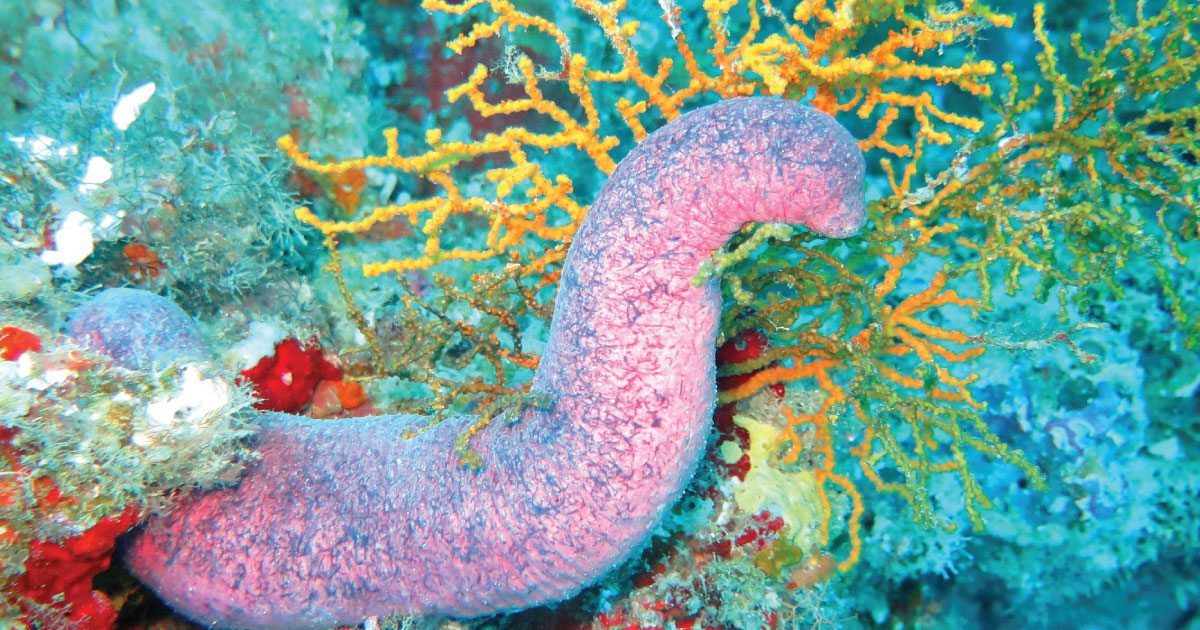
Sea Cucumber Ingredient, a Promising Treatment for Mesothelioma
Once again, researchers are touting nature’s bounty as an effective way to treat cancer. Last year, MesotheliomaHelp reported on several natural cancer-fighting treatments, including ginger, onions and turmeric. Now, researchers report that sea cucumbers could hold the key to fighting mesothelioma.
Researchers from the Comprehensive Cancer Center of MedUni Vienna and Vienna General Hospital report they have proven that the active agent, trabectedin, found in the Caribbean sea cucumber, already being used in treating ovarian cancer, may be a “promising new therapeutic option for MPM [malignant pleural mesothelioma],” according to an Oct. 25 article in Medical News Today.
http://www.medicalnewstoday.com/releases/313580.php
The study results, where researchers looked at combining trabectedin with existing anti-cancer drugs, showed that not only is trabectedin effective against cancer cells, but it also has minimal impact on healthy pleural cells. The researchers went on to confirm further success when trabectedin was used with another drug that tackles the protein bcl-2, known to prevent cell death. They found “a significant improvement in destruction of malignant pleural mesothelioma cells.”
“Trabectedin therefore seems to be a new, effective and safe treatment option for this disease [mesothelioma],” concluded the researchers.
Mesothelioma patients often combine conventional treatments, such as chemotherapy, with alternative therapies, like natural supplements. However, researchers are working hard to create anti-cancer drugs based on naturally-occurring elements, such as trabectedin, that can be synthetically manufactured for medicinal uses.
Nearly 3,000 Americans are diagnosed with mesothelioma each year. Although survival is often less than 18 months, continued breakthroughs in novel therapies give many hope that extended survival is possible.
See the full study in the Oct. issue of the American Association for Cancer Research journal.
http://www.aacr.org/newsroom/Pages/default.aspx#.U-5djWOWZv4
Researchers Identify Proteins to Target to Increase Sensitivity of Mesothelioma and Lung Cancer Treatments
As MesotheliomaHelp has reported countless times before, researchers focus much of their time on biomarkers in mesothelioma and lung cancer patients to help increase the effectiveness of treatment. By targeting the unique characteristics of a patient’s cancer the researchers aim to increase survival. Now, researchers believe ALK, a key gene often targeted with anti-cancer drugs, can be more effective when other proteins are also targeted.
Everyone has the abnormal anaplastic lymphoma kinase (ALK) gene in their cells, but when a part of it breaks off and reattaches in the wrong way, it becomes an abnormal ALK gene leading to out of control cell growth and ALK-positive lung cancer. By blocking the action of the abnormal ALK gene, crizotinib (Xalkori), an ALK-inhibitor, may shrink or slow the growth of tumors, according to Pfizer, the makers or Xalkori. However, some tumors do not respond to the drug or develop resistance to it.
Researchers from Moffitt Cancer Center focused on increasing the sensitivity of lung cancer tumors to ALK inhibitors. The team turned to proteomics to allow a large scale review of proteins so they could “identify potential drug targets that could boost ALK inhibitors and improve patient outcomes”, according to an Oct. 19 article in Medical News Today.
http://www.medicalnewstoday.com/releases/313580.php
They found a host of proteins, 64 of them, could be used to increase sensitivity to crizotinib, and nine of them could do the same for alectinib, another ALK-inhibitor. They eventually narrowed the list down to two “adaptor proteins FRS2 and CC2D1A” that can increase the sensitivity of lung cancers to ALK inhibitors.
“Knocking down either of these two proteins, the scaffolding proteins FRS2 and CC2D1A, sensitized cell lines to the ALK inhibitors crizotinib and alectinib,” wrote the researchers. “Thus, a clinical strategy that inhibits FRS2 or CC2D1A might enhance the efficacy of ALK inhibitors in some patients.”
Crizotinib, or Xalkori from Pfizer, is intended for the treatment of metastatic non-small cell lung cancers (NSCLC) in patients who express the abnormal anaplastic lymphoma kinase (ALK) gene. Approximately 3%-5% of people with NSCLC may test positive for the ALK fusion gene. There is a potential that the marker is also present in certain pleural mesothelioma cases making it a target for treatment.
Pleural mesothelioma is a rare form of lung cancer that invades the outer lining of the lungs called the mesothelium. The only known cause of mesothelioma is through inhalation or ingestion of airborne asbestos fibers. Both NSCLC and mesothelioma are aggressive cancers following equally aggressive, and similar, treatment protocols.
“Collectively, our data set provides a resource that enhances our understanding of signaling and drug resistance networks consequent to ALK fusions and identifies potential targets to improve the efficacy of ALK inhibitors in patients,” concluded the researchers.
Even if essays must be significant and specific, discover ways to filtering system the knowledge and choose only beneficial matters.
There is a temptation to include each individual feature of your personal analyze to bring about the essay all-natural and complete. However, your objective can be to narrow the topic, provide that you can to research and plan facts dissertation writing service you can afford, and select only the most essential points to turn out to be your tips.
For the full study see the Oct. 18 issue of Science Signaling.
http://stke.sciencemag.org/content/9/450/rs12

Free Mesothelioma Patient & Treatment Guide
We’d like to offer you our in-depth guide, “A Patient’s Guide to Mesothelioma,” absolutely free of charge.
It contains a wealth of information and resources to help you better understand the condition, choose (and afford) appropriate treatment, and exercise your legal right to compensation.
Download Now