Author: Joseph Belluck
Researchers Report the EGFR Gene Found in Mesothelioma Silences Tumor Suppression Leading to Uncontrolled Growth
The epidermal growth factor receptor (EGFR) gene has been the focus of researchers for finding new, effective treatments for both lung cancer and mesothelioma patients. The gene, that is overexpressed in more than 50% of pleural mesothelioma patients, and in approximately 15% of lung cancer patients, is one of the primary targets for bringing personalized care to the cancer patients. Now, researchers report they understand just how the gene impacts cancer growth.
Researchers from Yale are referring to the EGFR gene as the “silencer” gene, because, they say, it “silences genes that typically suppress tumors.” The team, led by Narendra Wajapayee, assistant professor of pathology and a member of Yale Cancer Center, report in a June 23 press release, that this critical finding “may lead to the development of more effective, individualized treatment for patients with lung cancer and other cancer types.”
Wajapayee and the team found that EGFR negatively regulated the TET1 protein, important for controlling gene expression and required to suppress tumors, allowing the cancer cells continue to grow and divide.
“EGFR can target multiple unrelated tumor suppressor genes in different cancer types using a common mechanism,” said Wajapayee.
Approximately 2,500 to 3,000 Americans are diagnosed with mesothelioma, an asbestos-caused cancer, each year. Most people diagnosed with mesothelioma are retired workers and veterans who were exposed to asbestos in a workplace or during military service decades ago. The most common form of the cancer is malignant pleural mesothelioma, affecting the lining of the lungs. Disease symptoms can take between 15 and 60 years to appear.
Mesothelioma often resists standard treatments and can build up a resistance to the powerful chemotherapy drugs used to attack the aggressive cancer. Although even targeted EGFR inhibitors can eventually become ineffective, personalized cancer treatment targeted to the unique characteristics of the patient optimizes the potential for success of the treatment.
“The finding informs the future direction of research and treatment of patients who don’t respond or develop resistance to drugs that inhibit EGFR,” said Wajapayee . “It will also help determine how effective cancer therapies will be against different EGFR mutations.”
The results of the study can be found in the June 23 issue of Cell Reports.
Sources:
- Researchers from Yale
http://news.yale.edu/2016/06/23/silencer-study-reveals-how-cancer-gene-promotes-tumor-growth - Cell Reports
http://www.cell.com/cell-reports/fulltext/S2211-1247(16)30700-8
The Results of Mesothelioma Research are Worth The Wait
At a recent conference, a distinguished mesothelioma specialist was explaining how mesothelioma is a very complicated, aggressive cancer and that every case is different. He continued, by saying that while progress is ongoing it can already be seen in certain segments of patients with mesothelioma. Intellectually I know he is right, but all my patients have names and stories, and emotionally I pray that they will be the ones that benefit from the progress. Today, I saw firsthand the results of some of that progress.
Three years ago Mr. Z had an extrapleural pneumonectomy for his mesothelioma. His recuperation was complicated. He had a supportive brother and sister. He had not married and relied on his siblings and nieces and nephews for emotional support. Throughout his stay in the hospital and in the numerous rehabs they were with him.
We had visited him in multiple rehabs, talked with his sister multiple times, encouraged him to continue to fight. The last time I saw him was around two years ago, he was being released from the rehab and was headed home. He lived downstairs in a two-family house where his sister and her family lived upstairs.
Today at work, I was assisting another nurse and thought the patient on the stretcher looked vaguely familiar. When he said his name, and I asked him where he was from, it registered. I thought he was his brother: he looked wonderful! He had gained weight, was home and had been home for a couple of years. He was living with some of the challenges that mesothelioma and a long recovery had left him, but he was at home doing what he wanted. He was enrolling in a clinical trial and was going to have a procedure to see if he was a candidate. As expected his sister and brother were with him.
After the procedure, I saw his sister and brother. After a big hug and a few tears, his sister said she remembered our conversations and my encouragement, and she shared how well her brother had been doing. Her reflection after three years that although it had taken a long while to get to this point, they were glad to have stayed the course. Now, they were attempting to enroll him in a clinical trial that was a result of the progress that we had been following over the years.
As they were leaving they were discussing when to order Thai food and the best time of day to avoid the rush. Sometimes progress is slow and research takes time- but it is so worth it!
Photo Credit: National Cancer Institute
Liquid Biopsies Continue March Towards Use as Diagnostic Tool
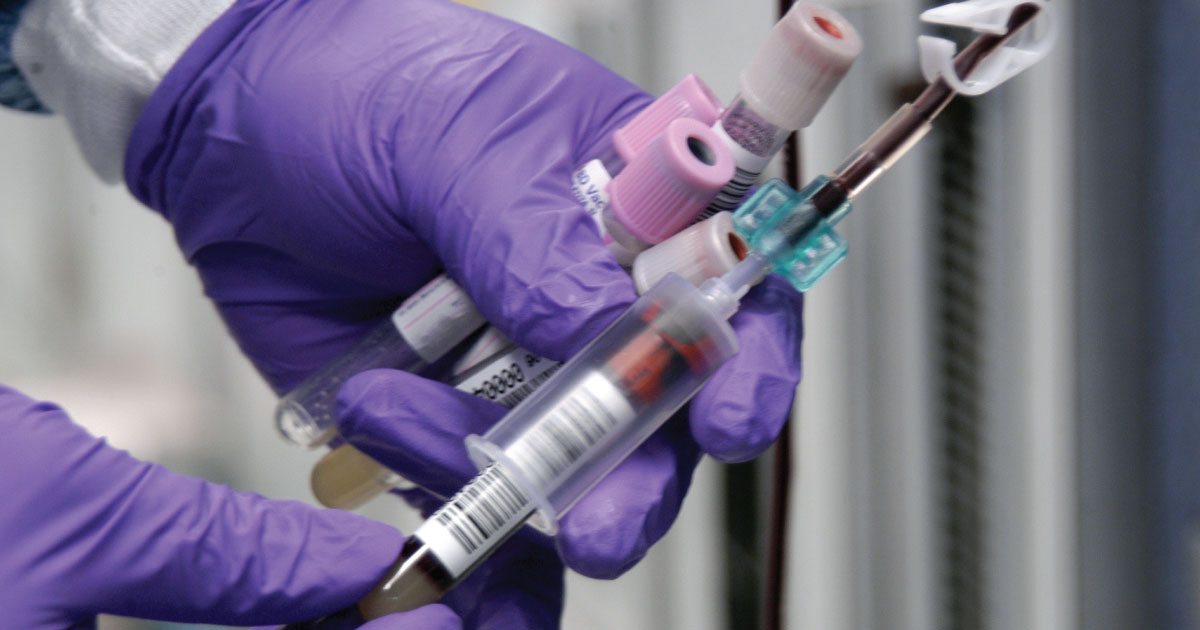
MesotheliomaHelp has reported several times over the last year about the promising cancer detection process referred to as a “liquid biopsy.” By using a blood test, as opposed to conducting a traditional biopsy requiring a painful process to remove tissue, researchers report they can detect a specific mutation in a specific cancer to drive treatment. Now, researchers report they are one step closer to developing a blood test that can detect nearly any mutation in cancer.
In a June 6 press release, Guardant Health, along with Samsung Medical Center (Sungkyunkwan University School of Medicine, Korea), reports success with the NEXT-2 clinical trial of 200 advanced cancer patients. The study that used liquid biopsy to test the feasibility of using it “as the sole diagnostic tool” to guide oncologists in matching patients to therapies for multiple cancers, “demonstrated high actionability in matching patients to targeted therapies, as well as statistically significant response rates in lung (88%) and gastric (60%) cancers.”
“The results we have seen have been outstanding, and have certainly exceeded our expectations,” said Dr. Jeeyun Lee at Samsung Medical Center, the primary investigator on the study.
The NEXT-2 trial used the Guardant360 technology – the first and only liquid biopsy that covers all 70 guideline-recommended biomarkers in a single test, according to Guardant. Next up for Guardant is to refine their technology to show that it can effectively spot previously undetected cancers in high-risk patients, such as smokers. Potentially, this technology can be used in other high-risk patients like those previously exposed to asbestos, to detect mesothelioma.
In addition, in a June 4 article in Time, Guardant reported encouraging results from a study of 15,000 patients who were tested with Guardant360. The team was able to identify cancer mutations in over two-thirds of the patients where existing treatments are available. When compared with a traditional tissue biopsy, the blood tests were 98% accurate.
On June 1, the U.S. Food and Drug Administration announced approval of the first liquid biopsy test to detect the EGFR mutation in lung cancer patients. The cobas EGFR Mutation Test v2, is a companion diagnostic for the cancer drug Tarceva (erlotinib), an EGFR tyrosine kinase inhibitor used to treat lung cancer and mesothelioma.
The FDA notes that tumor DNA actually sheds from a tumor into the bloodstream, allowing a liquid biopsy, or blood test, to be used to detect cancer mutations. Currently, there are no effective non-invasive methods for early detection or treatment monitoring for either lung cancer or mesothelioma. However, a blood test can be used for both detection, treatment monitoring as well as for identifying the appropriate treatment protocol.
“Approvals of liquid biopsy tests make it possible to deliver highly individualized health care for patients,” said Alberto Gutierrez, Ph.D., director of the Office of In Vitro Diagnostics and Radiological Health in the FDA’s Center for Devices and Radiological Health. “Liquid biopsies also have the potential to allow physicians to identify patients whose tumors have specific mutations in the least invasive way possible.”
“This is a great day for patients,” said Helmy Eltoukhy, co-founder and CEO of Guardant Health. “With the evidence that liquid biopsies are both concordant with tissue, and useful for treating, clinicians have a tool for genotyping that doesn’t bring with it the cost and potential harm of repeat invasive biopsies.”
Sources:
- Guardant Health
http://www.prnewswire.com/news-releases/first-prospective-clinical-utility-trial-using-comprehensive-liquid-biopsy-to-guide-metastatic-cancer-patients-to-molecularly-matched-therapies-demonstrates-comparable-results-to-tissue-based-testing-300279906.html - U.S. Food and Drug Administration
http://www.mercknewsroom.com/news-release/oncology-newsroom/merck-announces-fda-acceptance-review-mk-3475-biologics-license-appli - (June 4 article in) Time
http://time.com/4357037/blood-test-cancer

Life is Too Short to Take for Granted
This morning, I woke up. I woke up in my cozy home full of love and laughter.
I spent my day working with our business, playing with our daughter, and enjoying every moment with the man God chose to be my husband.
I often call our home our little “bubble,” our own space in this big world.
At the end of the day, I’m tired from all of the “living” I’ve done throughout the day. I fall asleep quickly, wake up, and do it all again.
This beautiful life and routine that God has given me bring me more joy than I could ever have imagined. I look forward to each new milestone, every adventure, and all the love.
Even though I recognize how blessed I am, is it possible that I still take it all for granted?
Life if short, it’s up to us to put as much “living” into our lives as possible. There is the old saying, “Are you too busy making a living that you’ve forgotten to make a life?” This oftentimes rings too true. It’s easy to get so wrapped up in work and chores that you don’t make time to enjoy those around you, people and experiences just waiting for you to notice them and take action.
My Dad’s life was cut short by mesothelioma, yes, but that doesn’t mean that mesothelioma is the only thing that has this effect. Sadly, we lose wonderful people every single day. These are the times where we usually stop and think about our lives and what we’re really doing with them. Why not realize the beauty of life every day?
Tell people you love them, spend time with family and friends. Don’t be afraid to experience new things. Truly live and thank the Good Lord above for the opportunity.
Finding Cause of Cancer Metastasis May Lead to New Treatments
MesotheliomaHelp has reported on a variety of studies recently where researchers have delved into the reason for metastasis in cancer. Many of the findings focused on cancer pathways. Now, in a new study, researchers report a pair of molecules may be the reason cancers grow unchecked. For aggressive cancers like mesothelioma that elude treatments, this finding could lead to a new treatment that ends cancer growth.
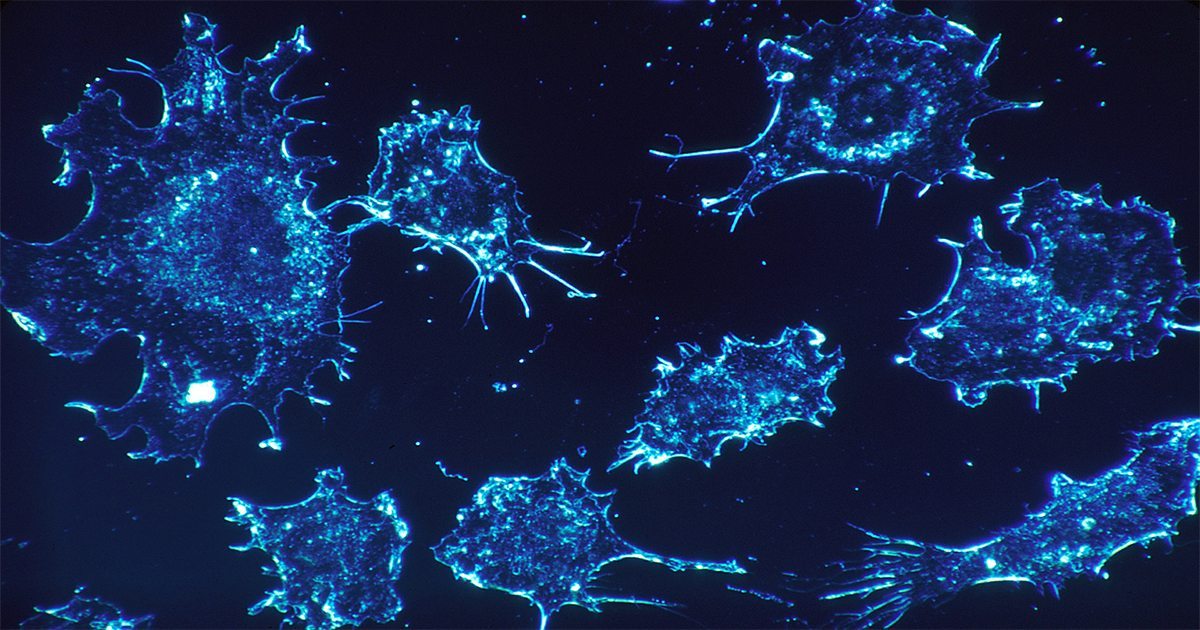
Researchers from Queen Mary University of London’s Barts Cancer Institute of England, led by Dr Stéphanie Kermorgant, report that they focused their research on understanding how cancer cells can continue to thrive after they break away from the primary tumor – when they are most vulnerable. They knew that integrins, or proteins on the cell surface, use ‘outside-in’ and ‘inside-out’ signaling to anchor cancer cells in place. But, using lung and breast cancer cell cultures from zebrafish and mice, they discovered that once the cancer cells began their metastasis process and were floating the integrins started using ‘inside-in’ signaling, or signaling from within the cell.
“Metastasis is currently incurable and remains one of the key targets of cancer research,” said Dr. Kermorgant. “Our research advances the knowledge of how two key molecules communicate and work together to help cancer cells survive during metastasis.”
They found that the beta-1 and c-Met proteins pair up, and migrate into the floating cancer cell to an area that is typically reserved for signaling cell death. Instead, in the case of floating cancer cells, the proteins’ “inside-in” signaling actually guides the rest of the cells to resist death.
Pleural mesothelioma, a cancer of the lining of the lungs caused by past asbestos exposure, is one cancer that is highly aggressive and spreads quickly to other sites. Survival is typically one year after diagnosis. Research shows that metastasis is the cause of nearly 90 percent of cancer deaths, making it critically important that researchers fully understand how to stop metastasis to increase survival in mesothelioma patients.
The QMUL researchers report that current research for integrins focuses on trying to prevent the anchor from failing, or keeping the cells attached in place and not migrating. However, they plan to prevent the integrin from getting inside the cells in the first place, thus, leading “to the design of better therapies against metastasis and more effective treatment combinations that could prevent and slow both tumour growth and spread.”
“We hope that our support of this exciting research will one day lead to better treatments that can prevent the spread of cancer,” said Dr. Susie Gray, Research and Communications Officer at Rosetree Trust, one of the organizations that provided funding for the research.
2,500 to 3,000 people are diagnosed with mesothelioma each year in the U.S. Mesothelioma takes decades to appear after exposure, but then advances rapidly.
The results of the study can be found in the June 23 issue of Nature Communications.
Photo Credit: Barts Cancer Institute, QMUL

Free Mesothelioma Patient & Treatment Guide
We’d like to offer you our in-depth guide, “A Patient’s Guide to Mesothelioma,” absolutely free of charge.
It contains a wealth of information and resources to help you better understand the condition, choose (and afford) appropriate treatment, and exercise your legal right to compensation.
Download Now