Author: Joseph Belluck

Mesothelioma Caregivers Offer Physical and Emotional Help
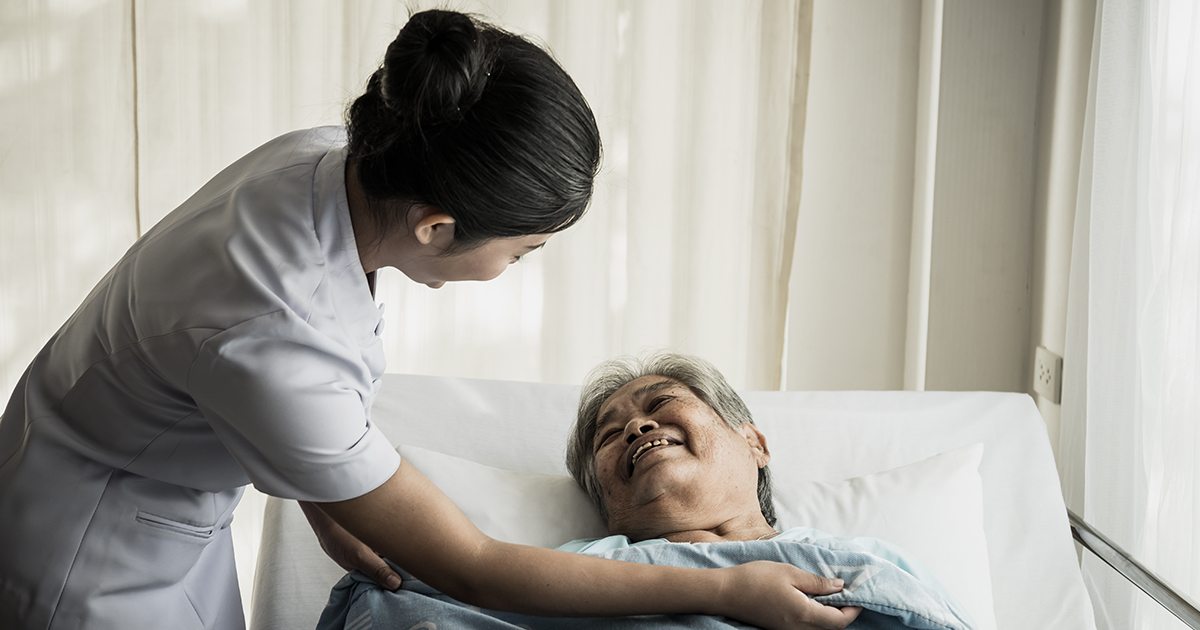
Looking back on the time that I spent as a part-time caregiver for my father as he battled pleural mesothelioma, I realize that there were two very different, yet interconnected, parts of the job. Taking care of Dad required concrete, physical help as well as emotional support.
Some of the tasks that were involved in aiding my Dad changed throughout his fight. Before his diagnosis, he couldn’t really do much without being short of breath. At that point, he needed help with chores around the house, things that he would usually have done without batting an eye. After his diagnosis and surgery, he required help cleaning his incision site, navigating movement with his chest tubes, and regaining his strength.
Once Dad was recovered and completed his four rounds of chemotherapy, he felt great! He was cutting grass, playing with his bluegrass band, and taking walks much like he did before he fell ill. One thing that he did lose throughout this process was some muscle. A lot of the time he would get frustrated; he just couldn’t seem to do the things he could before we were presented with the term “mesothelioma.”
These were the times where the second part of caregiving kicked in. It was so vitally important for us to support Dad on a deeper level. He had to know that we were there for him to lean on when he was having a tough day accepting what had happened to him. He would often tell me that he was frustrated. Having been a man who could seemingly do anything and then all at once be changed, had to have been a hard thing to endure.
Loving Dad through his mesothelioma was the easy part; to know him was to love him. I know that he always felt that love; the love of family and friends, and the love of God. That is what carried him through.
Please remember that when you are caring for someone afflicted with this cancer, they are still the same person. Don’t allow them to be defined by a disease. Help them with their bodily needs, but don’t forget those emotional ones as well.
Know more about Mesothelioma and how you can deal with it.

Recurrence of Cancer is Mentally Challenging
The possibility of the recurrence of cancer is something that everyone diagnosed with cancer lives with every day. Recurrence of mesothelioma is often difficult to avoid. According to the American Cancer Society, “cancer recurrence is defined as the return of cancer after treatment, and after a period of time during which cancer cannot be detected. The same cancer may come back in the same place it first started or somewhere else in the body.” There are three different types of recurrence, local, regional and distal.
There is a difference between recurrence and progression. When cancer spreads or gets worse it is classified as progression of disease. When dealing with mesothelioma from a psychological viewpoint, recurrence or progression can be just semantics.
When mesothelioma recurs it takes a toll on everyone – patient, family and caregivers. There are treatment options for recurrence which can include surgery, clinical trials, radiation, or chemotherapy, all designed to help the mesothelioma patient‘s quality, and length of life.
Once a specific therapy is once again selected it is important for patients and their families to “get their head back in the game.” This can be a challenge. After having gone through the initial diagnosis, and treatment plan, and returned to life with a “new normal,” the news of a recurrence can be devastating.
One patient who had a recurrence of mesothelioma 18 months after diagnosis was surprised at the news. Although he knew it was a possibility, he was not prepared for the news. His scan was positive, and he was now faced with another round of decisions. Did he want to continue on this path or should he shift his focus to fighting the symptoms and the pain? He has gathered his options and will discuss them with his family and his team. Together they will come to a decision that is right for him and his family.
As a community we can see the progress that has been made. But as individuals, and family members, the terms, semantics and statistics become very personal when dealing with mesothelioma progression or recurrence.

Afatinib Better Than Gefitinib in Extending Survival for Lung Cancer Patients
In January 2015, Boehringer Ingelheim reported results from clinical trials that showed EGFR-expressed lung cancer patients treated with afatinib saw “significantly extended overall survival” over those treated with chemotherapy.” Now, in the latest study, comparing the benefits of afatinib over gefitinib, researchers report afatinib resulted in improved progression-free survival compared with gefitinib.
An international team of researchers, led by Keunchil Park, MD, of Sungkyunkwan University School of Medicine in Seoul, South Korea, reported that although the three anti-cancer drugs gefitinib, erlotinib, and afatinib, have shown “superior” results to platinum-based doublet chemotherapy, no study has done a comparison between the drugs, according to an April 29 article in Cancer Network.
In the LUX-Lung 7 clinical trial of 319 EGFR mutation-positive lung cancer patients, half of the patients were treated with afatinib and the other half received gefitinib. The researchers reported the afatinib patients realized better progression free survival at 24 months at 17.6% vs. 7.6% in the gefitinib patients. The time-to-treatment failure was also better with afatinib, at 13.7 months vs. 11.5 months with gefitinib, and objective tumor response for afatinib was 70% compared to 56% with gefitinib.
“The improved antitumor activity with afatinib noted in this trial might reflect its more potent and irreversible inhibition of EGFR signaling,” the authors wrote. “Our findings suggest that first-generation and second-generation EGFR targeted drugs might not be interchangeable.”
In July 2013, the U.S. Food and Drug Administration granted approval to afatinib, a tyrosine kinase inhibitor that blocks proteins that promote the development of cancerous cells, for patients with late stage non-small cell lung cancer whose tumors express specific types of epidermal growth factor receptor (EGFR) gene mutations. The FDA approved gefitinib, also a kinase inhibitor, for the initial treatment of metastatic EGFR-positive non–small-cell lung cancer in July 2015.
EGFR is a protein found on the surface of some cells to which epidermal growth factor binds, which causes the cells to divide and spread. It is found at abnormally high levels on the surface of many types of cancer cells. According to a 2009 article in Current Drug Targets, EGFR over-expression has been shown in more than 50% of pleural mesothelioma patients. The American Society of Clinical Oncology identified approximately 15% of patients with lung cancer in the U.S. expressing EGFR mutations.
Pleural mesothelioma is a rare, serious cancer affecting the lining of the lungs that occurs in individuals exposed to airborne asbestos fibers. Mesothelioma displays as a large mass of interlocked tumors that blend in with healthy tissue, by contrast, lung cancer is characterized by more distinct, individual tumors. However, the treatments for the two cancers are often similar. Any breakthrough or update in research for lung cancer patients equally benefits mesothelioma patients.
“We believe that these data provide additional evidence to help to inform decision making when choosing a first-line treatment for patients with EGFR mutation–positive NSCLC.”
For more information on the LUX-7 clinical trial see ClinicalTrials.gov.
https://clinicaltrials.gov/ct2/results?term=%22malignant+mesothelioma%22&recr=Open&pg=1
Results of the study were published in the April 12 edition of The Lancet Oncology.
http://secure.jbs.elsevierhealth.com/action/cookieAbsent
Sources:
- Cancer Network
http://www.cancernetwork.com/lung-cancer/afatinib-improves-pfs-vs-gefitinib-egfr-mutated-nsclc - FDA approved gefitinib
http://www.fda.gov/NewsEvents/Newsroom/PressAnnouncements/ucm454678.htm
Celebrate Mesothelioma Survivors Every Day
June 5 was National Cancer Survivors Day, a day set aside to ” to honor cancer survivors and to show the world that life after a cancer diagnosis can be fruitful, rewarding, and even inspiring.”Although this day has come and gone, chances are high that mesothelioma patients are aware of their cancer every day of the year. It is important that you also set aside time throughout the year to reach out and support a mesothelioma survivor.
June 5 was a day for mesothelioma survivors and their families to join the nearly 14.5 million other Americans, and millions more around the world, who have survived cancer. The day was a day for CELEBRATION for those who have survived, an INSPIRATION for those recently diagnosed, a gathering of SUPPORT for families, and an OUTREACH to the community, according to the National Cancer Survivors Day Foundation who sponsors the day. We encourage all of the mesothelioma community to take the time out to celebrate with mesothelioma survivors and their families – each and every day of the year.
Mesothelioma is a terminal cancer caused by past exposure to asbestos, a known carcinogen. Although there is no cure for the cancer, advances in treatments are helping patients live longer, more productive lives than in the past. These mesothelioma survivors, defined by the National Cancer Survivor’s Day Foundation as anyone living with a history of cancer – from the moment of diagnosis through the remainder of life, show true grit and strength every day while continuing to fight this dreadful disease.
“When most people hear the word ‘cancer,’ they automatically think the worst,” says National Cancer Survivors Day Foundation spokesperson, Laura Shipp in a May 20 press release announcing the day. “But the truth is that more people are living longer and better quality lives after cancer than ever before. National Cancer Survivors Day® is an opportunity for these cancer survivors – and those who support them – to come together and celebrate this new reality in cancer survivorship.”
In a statement on survivors day, Douglas R. Lowy, MD, Acting Director, National Cancer Institute, and Robert T. Croyle, PhD, Director, NCI Division of Cancer Control and Population Sciences, recognized the challenges cancer survivors face every day and acknowledged the role the NCI plays in helping improve survivorship, saying in part:
“As part of the leadership team of the National Cancer Institute (NCI), we also commend the tireless efforts of the researchers who are working to find new and better ways to control and treat cancer more effectively and safely. This is a vitally important task. Although more and more cancer survivors will return to active and productive lives following their cancer diagnosis, for many of them, the long-term physical, psychological, and social effects of cancer and its treatments remain serious and challenging. Recognizing this, survivorship research remains a key component of NCI’s research portfolio.”
The American Cancer Society reports the average survival time for people with mesothelioma, is between 4 and 18 months. However, between five and ten percent of mesothelioma patients will live at least five years after diagnosis.
“Our Foundation hopes that NCSD serves as a call to action for further research, more resources, and increased public awareness to improve quality of life for cancer survivors,” said Shipp.
Sources:
- National Cancer Survivors Day
http://www.ncsd.org/about-us - National Cancer Institute
http://www.cancer.org/cancer/news/features/when-a-friend-has-cancer - National Cancer Survivors Day Foundation
http://www.ncsd.org/_blog/Front_Page_News/post/Press_Release-May2013/
Don’t Wait To Make A Doctor’s Appointment
Many people have aversions to going to the doctor. When my Dad began having trouble breathing in the summer of 2011, we urged him to make an appointment. He said, “I’m fine, I’m just having some trouble catching my breath. It’s really hot outside, don’t worry about me!” The symptoms began getting worse and then other symptoms started to arise.
I remember when he went to the doctor and they said he had fluid on his lung. It seemed like it could be an infection; that would have been very treatable. Then they found a shadow on his lung. Then he needed the fluid drained. After that came a procedure that finally gave him the awful diagnosis of mesothelioma.
If you think that you have been exposed to asbestos and are experiencing symptoms of asbestos-related diseases like shortness of breath, coughing, weight loss, etc., please consider getting checked out. It’s important to know what you’re up against if it is mesothelioma. It can allow your medical team to create a treatment plan that will be best for you. You owe it to yourself and your loved ones!

Free Mesothelioma Patient & Treatment Guide
We’d like to offer you our in-depth guide, “A Patient’s Guide to Mesothelioma,” absolutely free of charge.
It contains a wealth of information and resources to help you better understand the condition, choose (and afford) appropriate treatment, and exercise your legal right to compensation.
Download Now